I am part of a team visiting Nicaragua as part of an exchange to learn about their healthcare system.
The delegation from George Eliot Hospital (GEH) and public sector trade union, UNISON, are planning to twin with a Nicaraguan hospital. We aim to sign the agreement in the UK in April. It is between GEH and Hospital Nilda Patricia Velasquez de Zedilla in Cuidad-Sandino, Managua. The GEH branch of UNISON will also twin with the local branch of FETSALUD, the healthcare workers union. The aim of the agreement is to promote co-operation and share expertise to better overcome challenges faced by both partners.
The delegation will comprise UNISON Deputy Convenor at George Eliot Hospital, Roy Emblen, Consultant Paediatrician, Dr Sebastian Yuen and International Officer, UNISON, Solihull Branch, Mark Glover.

The Nicaragua expenditure on health was the lowest in Central America
In 2012, Nicaragua spent a total of 8.2% of its GDP on health. In comparison, UK public and private expenditure on health in 2012 was 9.4%. The Nicaragua per capita expenditure was US$335 and UK US$3,495.

MINSA has a mission to deliver high quality, free healthcare for its citizens
MINSA’s mission is to provide Nicaraguan citizens with individually tailored health services, to guarantee free and universal access to health services, and to promote healthy practices and lifestyles that will improve quality of life and life expectancy and maximize national efforts to foster human development. MINSA seeks to develop a public health system that enforces the civil right to health care and addresses the inequality of services, while improving Nicaraguans’ living conditions and helping the country advance.

Structure of the Nicaraguan Healthcare System
The health service is mainly provided by the public sector and is financed by general taxes. MINSA has a central administrative structure and 17 regions (SILAIS). There are 32 hospitals, including 11 specialty facilities in Managua. The most common reason for admission is complications of pregnancy (for example post-partum haemorrhage, hypertension or sepsis). In contrast, there are only three hospitals in the Caribbean region (which covers 55% of the land).
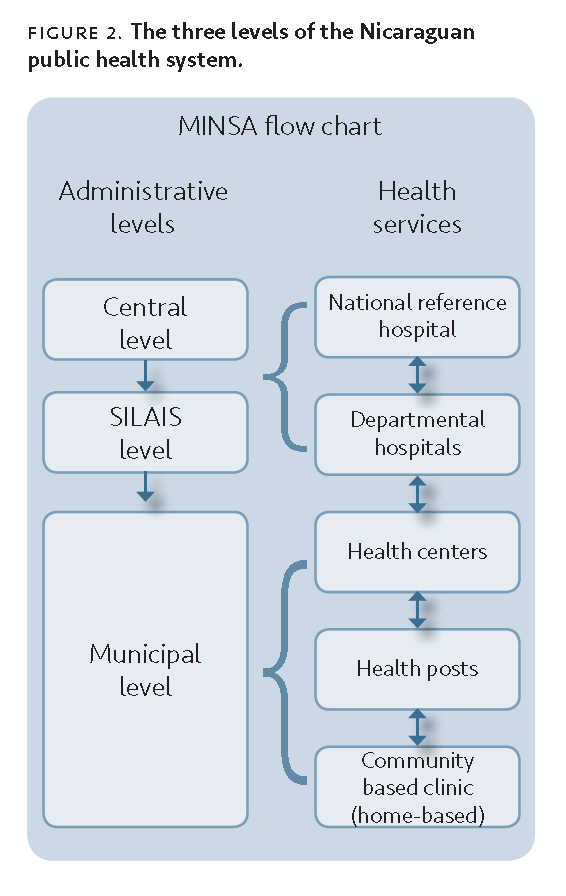
Health Centres provide primary care and are staffed by GPs and nurses. Services include pharmacy, immunisation, mental health, environmental health and zoonoses (diseases that can be transmitted to humans from animals). Some offer dentistry and 28 have beds for minor procedures. A Health Centre with beds serves 170,000 and there are 144 without beds per 36,000 on average. The Health Centre staff also provide outreach support to 850 Health Posts staffed by one or two staff. These focus on primary healthcare, health promotion and disease prevention.

There is also a strong nationwide, community-based health network.
This includes 4,400 home-based community clinics and 33 maternity homes. These Casa Materna ensure that all expectant mothers are housed close to a hospital prior to giving birth in the hospital. The staff are MINSA-trained, unpaid, independent volunteers (2011 data):
- Brigadistas (12,700)
- Midwives (6,200)
- Voluntary Collaborators (7,100)
- Health Promotors (2,800)
- Health Representatives (340)

Salaries, once the lowest in Central America, are now increasing
The new government has increased pay and provided enhanced salaries for long service and for working in remote areas. These were co-produced with FETSALUD who negotiated a comprehensive collective bargaining agreement.
Medical specialist: US$750pm
GP: US$550pm
Nurse: US$210pm
Laboratory technician: US$130pm
These figures are from 2011 and have significantly increased (eg Medical specialist now earns a base salary of US$1200).
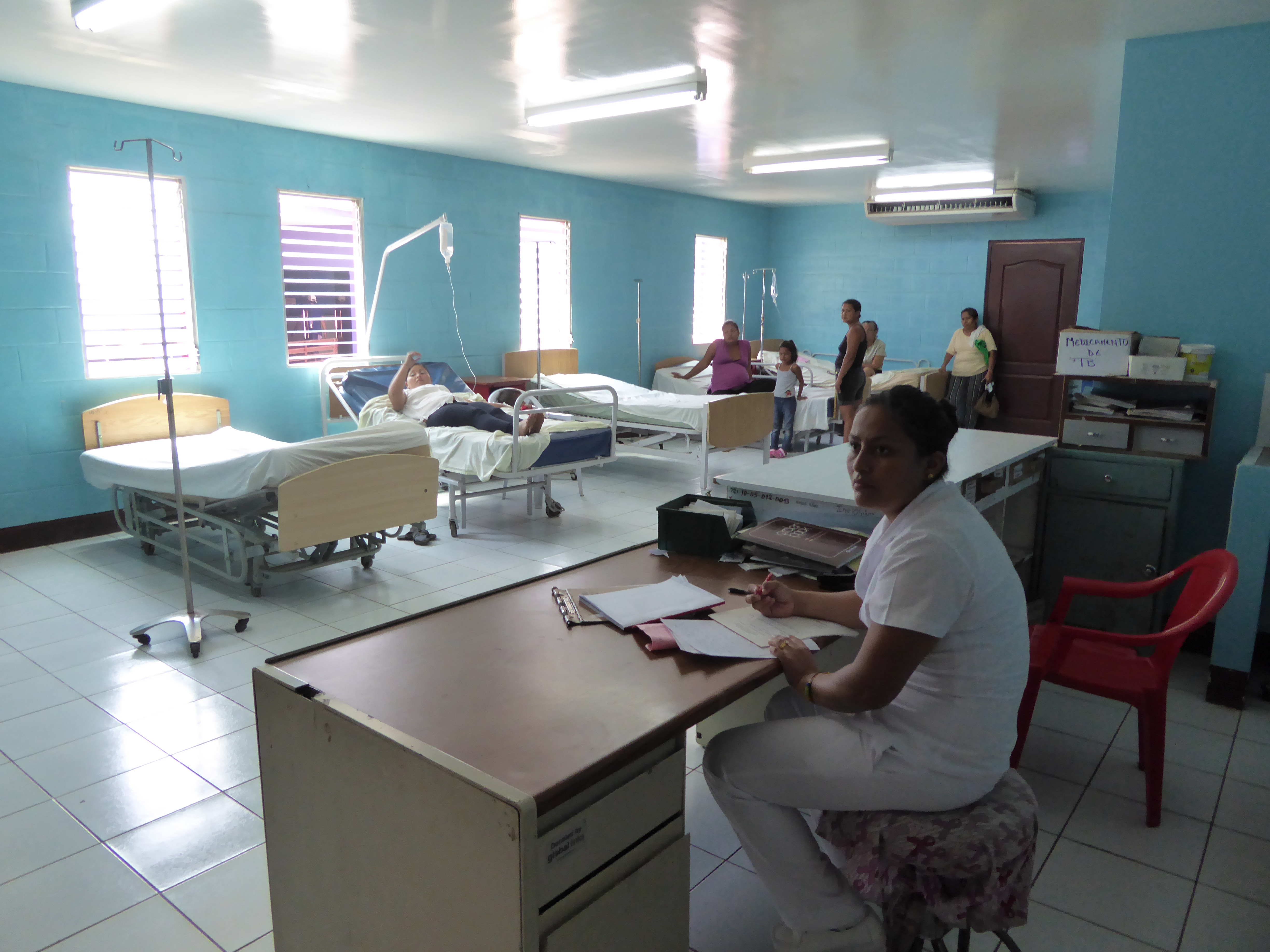
Water and electricity supplies are also now much better
In 2001, 35% of health facilities did not have electricity and 45% did not have water. Of those with water, half only had a supply for four hours or less a day. By 2007, there were still long blackouts due to an insufficient electricity supply. Now 70% have reliable electricity. The government have committed to increasing it to 80% this year and 90% by the end of 2016. Other improvements under the new Sandanista government are free healthcare and free prescriptions.

 s3bster's Blog